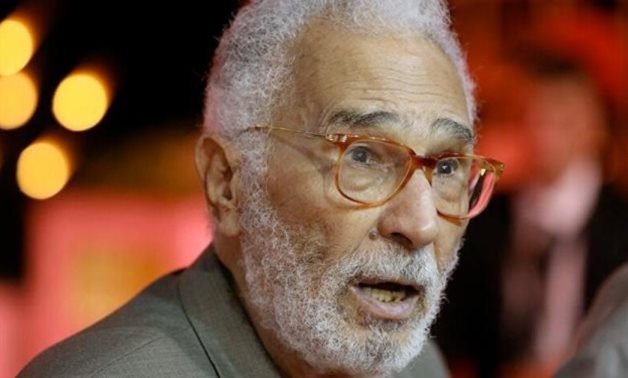




President Abdel Fattah El Sisi mourned the passing of esteemed actor Abdel Rahman Abu Zahra in a heartfelt message shared on his official Facebook page, offering his deepest condolences and praising the late artist’s remarkable legacy across theater, cinema, and television.
“Deepest condolences on the passing of the esteemed actor Abdel Rahman Abu Zahra, who presented valuable and distinguished artistic works in theater, cinema, and television. My sincere condolences to his family and loved ones.”
Abdel Rahman Abu Zahra Passes Away at 92. A distinguished artist of the highest caliber, Abdel Rahman Abu Zahra helped shape the conscience and imagination of Arab audiences for nearly six decades. Signs of his exceptional talent first appeared during his school years, when he became known for his remarkable ability to imitate his teachers, drawing widespread attention and encouragement to pursue acting professionally. He later enrolled at the Institute of Dramatic Arts, beginning an academic journey that culminated in his graduation in the late 1950s.
Born in the city of Damietta in 1934, Abu Zahra graduated from the Higher Institute of Dramatic Arts in 1958 with a bachelor’s degree. He initially worked as an employee at the Ministry of War before being appointed as an actor at the National Theatre in 1959. His first theatrical performance was “Awdet Al Shabab” (Return of Youth) by legendary writer Tawfiq al-Hakim.
He soon rose to prominence on stage after stepping into the lead role of the play “Bedaya W Nehaya” (The Beginning and the End) adapted from a story by Nobel Prize-winning author Naguib Mahfouz, following the withdrawal of actor Omar El Hariri due to personal circumstances. He later starred in the play “Al Mahrousa” (The Protected One) after the death of its original lead actor Salah Sarhan. His theater career flourished, eventually reaching nearly 100 stage productions.
Abdel Rahman Abu Zahra went on to establish a remarkable career in cinema and television, appearing in numerous acclaimed productions. In film, his credits included “Eterafat Emraa” (Confessions of a Woman), “Al Ekhtyar” (The Choice), “Al Shawarea Al Khalfeya” (Back Streets), “Baba Akher Men Yaalam” (Daddy The Last One To Know), “Emraatan” (Two Women), “Al Motawahesha” (The Savage Woman), “Matawaa wa Bahia”, “Al Laana” (The Curse), “Tarweed Al Ragol” (Taming the Man), “Al Haqiqa Esmoha Salem” (The Truth Is Called Salem), “Al Noum Fel Assal” (Sleeping in Honey), “Ard Al Khof” (Land of Fear), “Hob Al Banat” (Girls’ Love), “Del Al Samaka” (Fish Tail), “Enta Omry” (You Are My Life), “Al Gezeira” (The Island), and “Teta Raheeba” (Terrible Teta).
On television, he became widely recognized through iconic series such as “Al Horoub” (Escape), “Lahzet Ekhtyar” (A Moment of Choice), “Hekayet Al Doctor Masoud” (The Story of Dr. Masoud), “Al Mashrabiya”, “Qalb Bela Domou” (A Heart Without Tears), “Mohamed Rasool Allah” (Mohamed Messenger of God), “Rasool Al Insaneya” (Messenger of Humanity), “Saalik Walaken Shoaraa” (Vagabonds but Poets), “Al Waseya” (The Will), “Al Soqout fi Beer Saba” (Falling into the Well of Sheba), and “Al Zini Barakat.” One of his most celebrated performances came in the beloved series “Lan Aeesh fi Gelbab Aby” (I Will Not Live in My Father’s Robes), a role that remains deeply engraved in the memory of audiences and continues to circulate widely on social media to this day.
His television legacy also included productions such as “Al Hawy” (The Magician), “Omar Ibn Abdel Aziz”, “Sanawat Al Ghadab” (Years of Anger), “Al Seera Al Hilaliya”, “Moghamarat Al Qarn Al Qadem” (Adventures of the Next Century), “Nahno La Nazraa Al Shouk” (We Do Not Plant Thorns), “Gomhoreyet Zefta” (The Republic of Zefta), “Lama Al Talab Fat” (When the Fox Passed), “Awan Al Ward” (The Time of Roses), “Haret Al Moez”, “Goha Al Masry” (Juha the Egyptian), “Amira fi Abdeen” (A Princess in Abdeen), “Al Aamma Nour” (Aunt Nour), “Al Tarek” (The Visitor), “Ayamna” (Our Days), “Al Dam wal Nar” (Blood and Fire), “Meshwar Emraa” (A Woman’s Journey), “Al Ameel 1001” (Agent 1001), “Al Masraweya”, “Al Malek Farouk” (King Farouk), “Man Atlaq Al Rosas Ala Hind Allam?” (Who Shot Hind Allam?), “Ana Alby Daleely” (My Heart Guides Me), “Soqout Al Khelafa” (The Fall of the Caliphate), “Maleka fi Al Manfa” (A Queen in Exile), “Al Otta Al Amia” (The Blind Cat), and “Al Gamaa” (The Brotherhood).
One of Abdel Rahman Abu Zahra’s most memorable artistic experiences was his work with Walt Disney, where he provided Arabic dubbing for several famous animated films. He left an unforgettable vocal imprint through his portrayal of Scar in The Lion King, a performance many considered the definitive Arabic interpretation of the character. He also voiced Jaffar in Aladdin, in addition to participating in several episodes of the animated series “Dar Al Far” (The Mouse House).

Be Social




Comments
Leave a Comment