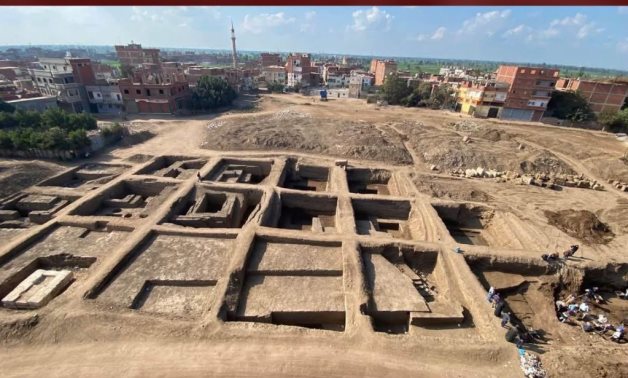
Tell el-Faraoun in Sharqia Governorate.




As part of the work of the Egyptian archaeological mission affiliated with the Supreme Council of Antiquities at the Tell el-Faraoun site in El-Husseiniya, Sharqia Governorate, a massive statue has been uncovered.
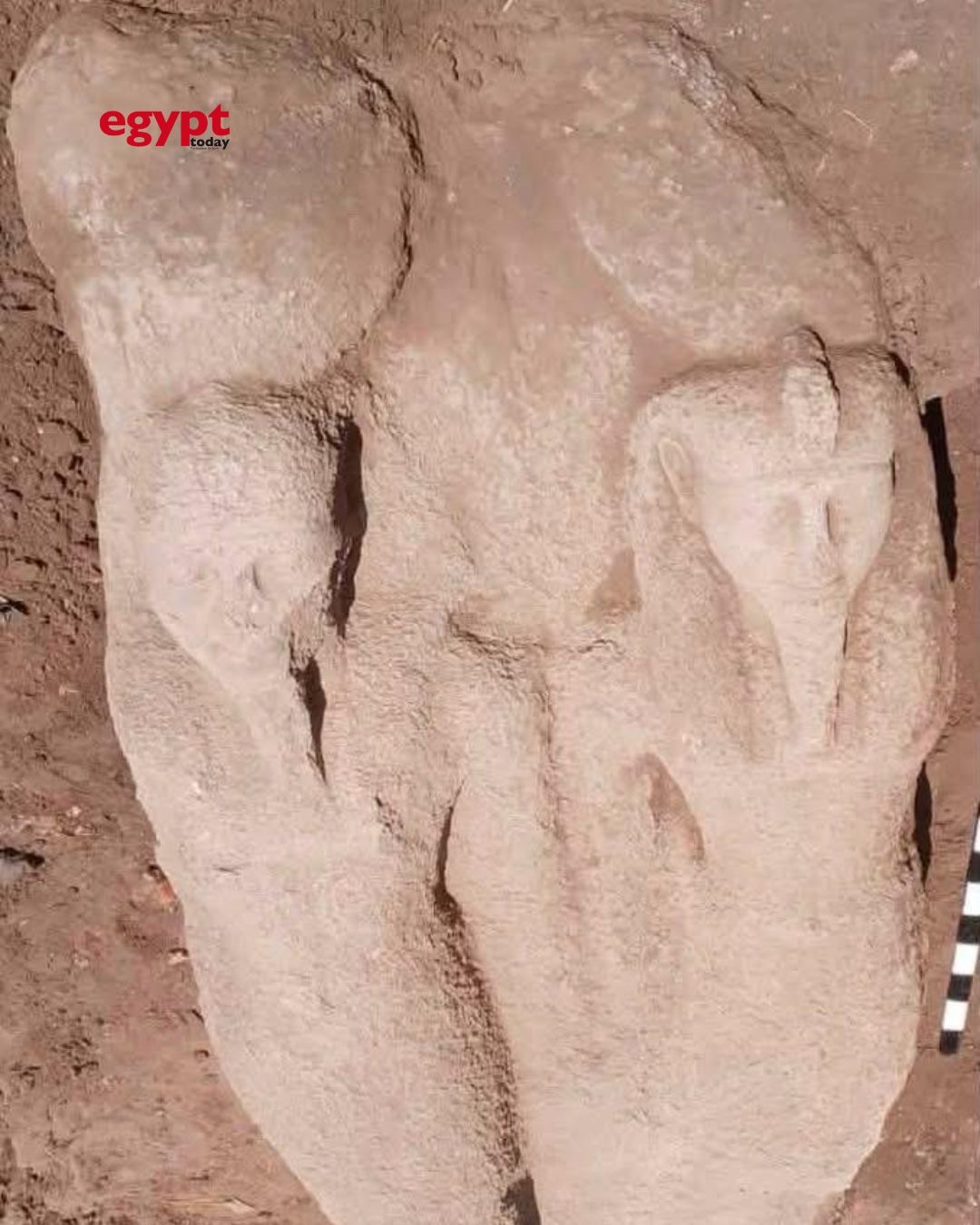
The statue is missing its lower section, which originally included the legs and base, and it is believed to depict King Ramesses II.
Dr. Hesham El-Leithy, Secretary-General of the Supreme Council of Antiquities, confirmed that this discovery represents an important piece of archaeological evidence shedding light on religious and royal activity in the eastern Delta.
It also contributes to a better understanding of the phenomenon of relocating and reusing royal statues during the New Kingdom, particularly in relation to the connection between regional sites and major royal centers.
He explained that the statue is notably large, with an estimated weight of 5 to 6 tons and a height of approximately 2.20 meters.
It is in relatively poor condition; however, the remaining parts display artistic and royal features suggesting it was originally part of a triad group, similar to discoveries made at several archaeological sites in Sharqia Governorate.
Mohamed Abdel-Badie, Head of the Egyptian Antiquities Sector at the Supreme Council of Antiquities, added that preliminary studies indicate the statue was transported in ancient times from the city of Per-Ramesses to the Tell el-Faraoun site, historically known as “Imet,” where it was reused within a religious complex.
This reflects the site’s religious and historical importance across different periods.
As part of preservation efforts, the statue was immediately transferred upon discovery from within the temple complex to the storage facility in San El-Hagar, in preparation for urgent and precise restoration work, in accordance with the highest scientific standards for conservation.
It is also worth noting that last September witnessed the discovery of a stone stela representing a new copy of the famous Canopus Decree, issued by King Ptolemy III in 238 BC.
The decree was proclaimed when high priests gathered in Canopus (east of Alexandria) to honor and venerate Ptolemy III, his wife Berenice II, and their daughter, and to distribute the text of the decree across major Egyptian temples.

Be Social




Comments
Leave a Comment